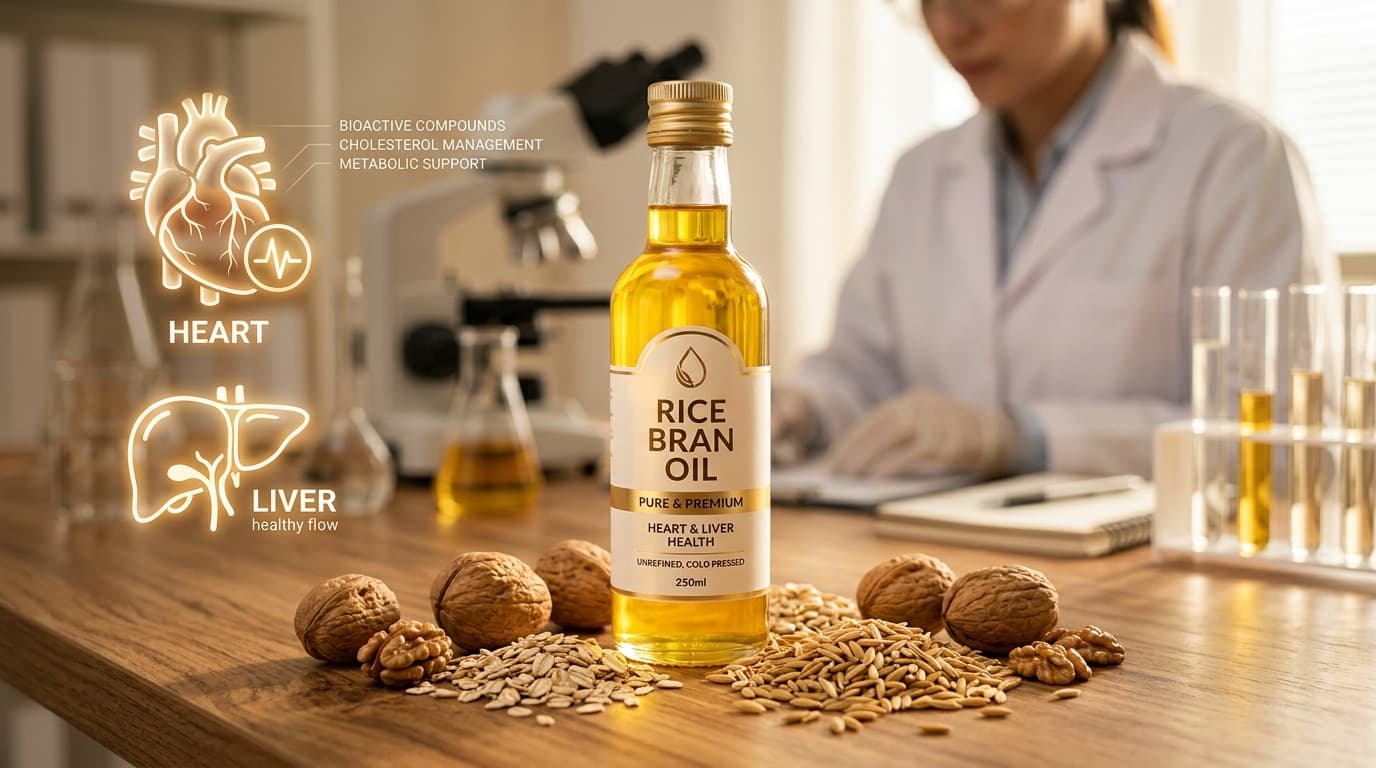
“Non-Alcoholic Fatty Liver Disease (NAFLD) affects over 38% of urban Indian adults. Replacing hydrogenated vanaspati or high-saturated fats with physically refined Rice Bran Oil containing 12,000+ PPM natural Gamma Oryzanol provides vital dietary support for hepatic lipid clearance and balanced LDL/HDL ratios.”
In routine health checkups across India, a diagnosis of Grade 1 or Grade 2 Fatty Liver (NAFLD) accompanied by elevated triglycerides and LDL cholesterol has become increasingly prevalent. Because Indian culinary traditions involve substantial sauteing, tadka, and curries, the choice of daily cooking fat plays an influential role in overall metabolic and cardiovascular wellness.
Let's examine how dietary fatty acids interact with hepatic metabolism and review the scientific literature on why Physically Refined Rice Bran Oil is widely favored in lipid-conscious diets.
1. The Science: How Dietary Lipids Influence Liver Function
The liver is the central organ for processing dietary fatty acids. Diets high in:
- Excessive Saturated Fats & Cholesterol: (from unmoderated animal fats, hydrogenated vanaspati, or cheap palm fractions), or
- Thermally Degraded Fats: (oils broken down by low smoke points or repeated re-frying),
can contribute to elevated circulating free fatty acids. When the influx of fatty acids exceeds the liver's capacity for beta-oxidation and VLDL export, triglycerides accumulate within hepatocytes (liver cells), contributing to hepatic steatosis.
Scientific Mechanisms of Gamma Oryzanol in Lipid Support:
Gamma Oryzanol is a naturally occurring complex of ferulic acid esters of sterols and triterpenoid alcohols found predominantly in the rice bran aleurone layer. Peer-reviewed research highlights three beneficial properties:
- Inhibits Intestinal Cholesterol Absorption: Competitively binds to micellar cholesterol, facilitating its natural elimination.
- Supports Hepatic Lipid Balance: Helps modulate lipogenic enzymes in liver cells to support balanced triglyceride levels.
- Provides Antioxidant Defense: Helps scavenge free radicals, reducing oxidative stress on cellular membranes.
2. Comparison of Cooking Fats for Lipid & Liver Support
| Oil Variant | Cholesterol (mg) | Fatty Acid Profile (SFA:MUFA:PUFA) | Nutritional Assessment |
|---|---|---|---|
| Physically Refined Rice Bran Oil | 0 mg (Plant source) | 33% : 40% : 27% (ICMR Ideal Ratio) | Top Pick (12,000+ PPM Gamma Oryzanol + Tocopherols) |
| Cold-Pressed Kacchi Ghani Mustard Oil | 0 mg (Plant source) | 8% : 65% : 27% (High MUFA & Omega-3 ALA) | Excellent (Cardioprotective ALA Omega-3 balance) |
| Desi Ghee (Clarified Butter) | ~256 mg / 100g | 65% : 30% : 5% (High Saturated Fat) | Strict Moderation (High SFA & dietary cholesterol) |
| Commercial Vanaspati / Palm Olein | 0 mg (High Palmitic) | 50% : 40% : 10% (High Saturated Fat) | Not Recommended (Trans-fats & high palmitic load) |
3. Why Physical Refining is Essential for Preserving Bioactives
When selecting Rice Bran Oil, confirming the refining technology is paramount. Conventional chemical refining utilizes sodium hydroxide (caustic soda), which saponifies and strips out over 70% of naturally occurring micronutrients.
At AB Udyog Pvt. Ltd., Jeevan Rekha Rice Bran Oil is refined exclusively through High-Vacuum Steam Distillation at 260°C with Zero Caustic Soda, preserving a guaranteed minimum of 12,000+ PPM natural Gamma Oryzanol. Read our technical breakdown in the Rice Bran vs Desi Ghee comparison.
4. Practical Dietary Protocol for Supporting Hepatic & Lipid Health
- Control Total Daily Intake: Adhere to ICMR recommendations of 3 to 4 teaspoons (15–20ml) of visible fat per person per day.
- Choose High-Stability Cooking Oils: Cook with Jeevan Rekha Rice Bran Oil (232°C smoke point) to prevent thermal oxidation and reduce oil absorption into food by up to 20%.
- Avoid Re-fried Foods: Street snacks fried repeatedly in industrial oils contain lipid peroxides and trans-fats that contribute to cellular oxidative stress.
- Maintain a Balanced Lifestyle: Pair heart-healthy fats with high-fiber whole grains, regular aerobic exercise, and clinical guidance from your healthcare provider.