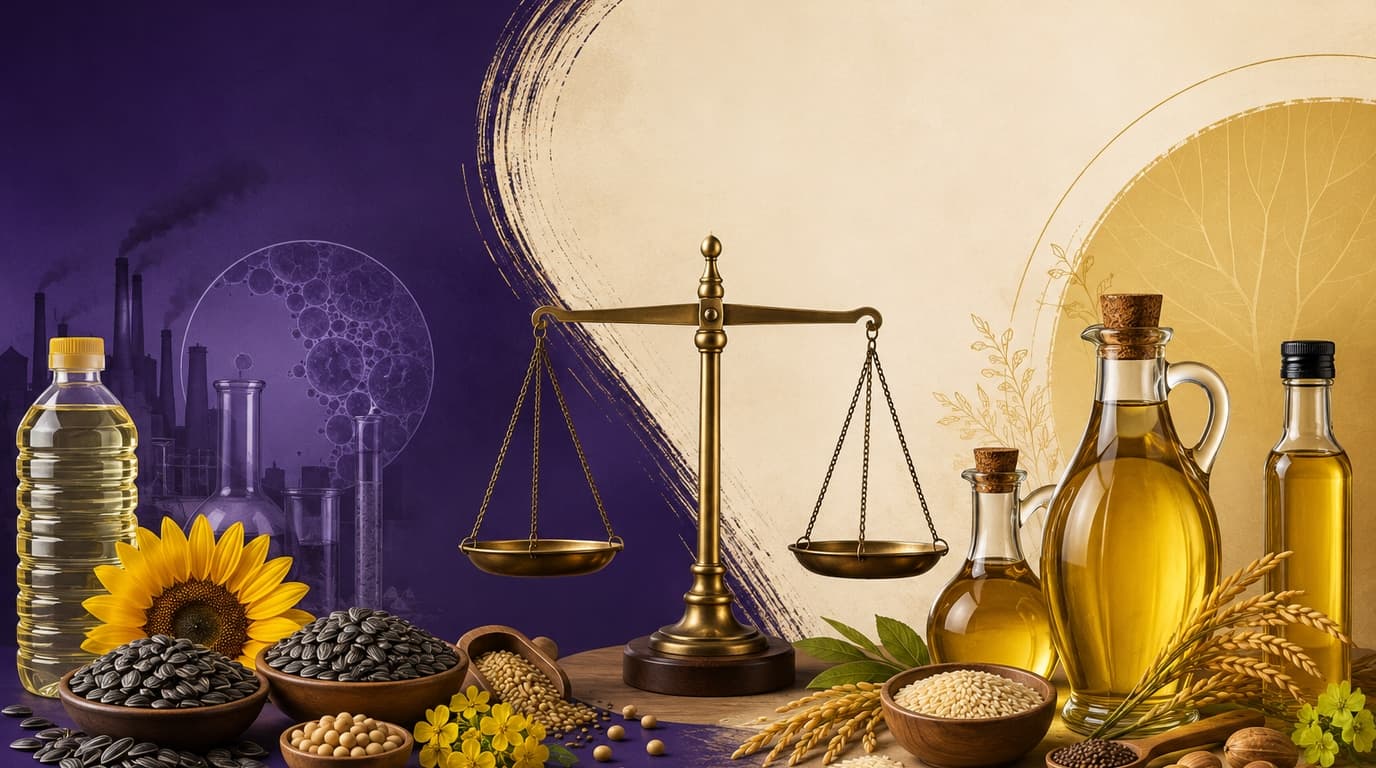
“The real danger in Indian kitchens is not the plant source itself, but the hidden chemical processing (caustic soda neutralization) and oxidative degradation from low-smoke-point oils during high-heat cooking. Choosing 100% physically refined, antioxidant-rich oils completely resolves this debate.”
If you have browsed social media recently, you have likely encountered alarming headlines claiming that all vegetable and seed oils are “toxic industrial sludge” that cause chronic inflammation, weight gain, and cardiovascular disease. Influencers recommend replacing all cooking fats with butter or tallow.
However, applying blanket Western anti-seed oil dogma to traditional Indian cooking ignores both food chemistryand the realities of our high-heat culinary methods. Let's cut through the viral noise with verified scientific facts from lipid biochemists, the Indian Council of Medical Research (ICMR), and certified refining experts.
1. Where Did the “Toxic Seed Oil” Panic Come From?
The seed oil controversy originated in Western diets dominated by ultra-processed junk food, commercial deep-fryers that reuse corn and soybean oils for weeks, and a severe imbalance in Omega-6 to Omega-3 fatty acids (often 20:1 instead of the recommended 4:1).
When polyunsaturated oils with low thermal stability are overheated repeatedly, they break down into toxic cyclic aldehydes and acrolein. But this does not mean every plant-based cooking oil in your kitchen is harmful.
The Three Core Factors That Actually Determine Oil Safety:
- Thermal Stability (Smoke Point): High smoke point (e.g., Rice Bran at 232°C / 450°F) prevents carcinogenic decomposition during Indian tadka and deep frying.
- Refining Methodology: 100% Physical steam refining vs harsh Chemical refining using Caustic Soda (Sodium Hydroxide).
- Antioxidant Preservation: Presence of natural protective micronutrients like Gamma Oryzanol, Tocopherols, and Phytosterols.
2. The Vital Distinction: Chemical vs Physical Refining
Much of the criticism directed at refined oils is valid when applied to chemically refined oils. In conventional industrial refining:
- Crude oil is washed with Caustic Soda (NaOH) to neutralize Free Fatty Acids (FFA).
- This aggressive chemical process creates soapstock residue and strips out over 70% of natural Vitamin E and bioactive compounds.
- Harsh acid-activated bleaching earth is used to artificially lighten the color.
At Jeevan Rekha Foods, our 150 TPD physical refinery in Burdwan uses 100% Physical Refining via High-Vacuum Steam Distillation. By leveraging enzymatic degumming and thermal vacuum stripping at 260°C without caustic chemicals, the oil retains its natural 12,000+ PPM Gamma Oryzanol and zero chemical residues. Learn more in our detailed Physical vs Chemical Refining guide.
3. Is Rice Bran Oil a “Seed Oil”?
Technically, no. Rice bran oil is extracted from the nutrient-rich brown outer layer (the bran and germ) of the rice grain (Oryza sativa)—an agricultural cereal, not an oilseed.
Nutritionally, it is one of the very few plant oils that naturally matches the ICMR-NIN recommended 1:1:1 lipid ratio (~33% SFA, 40% MUFA, 27% PUFA). Unlike high-linoleic seed oils that skew heavily toward pro-inflammatory Omega-6, Rice Bran Oil is predominantly monounsaturated (Oleic acid) and fortified with natural antioxidants that resist oxidative breakdown.
| Cooking Oil | Smoke Point | Key Active Nutrient | Health Verdict for Indian Cooking |
|---|---|---|---|
| Physically Refined Rice Bran Oil | 232°C (450°F) | 12,000+ PPM Gamma Oryzanol | Excellent (High stability & cholesterol balance) |
| Cold-Pressed Kacchi Ghani Mustard Oil | 250°C (482°F) | Allyl Isothiocyanate (AITC) + Omega-3 | Excellent (Traditional antimicrobial & heart support) |
| Chemically Refined Sunflower Oil | 225°C (437°F) | High Omega-6 (~65%) | Moderate (Can cause Omega-6 imbalance if unvaried) |
| Extra Virgin Olive Oil | 190°C (374°F) | Polyphenols & Oleic Acid | Unsuitable for deep frying (Smokes and burns quickly) |
4. The Scientific Verdict for Your Kitchen
You do not need to eliminate plant oils from your family's diet. Instead, follow these three evidence-based rules:
- Avoid Chemically Neutralized Oils: Look for labels explicitly declaring “100% Physically Refined” with verifiable NABL batch quality certifications.
- Respect Smoke Points: Use high-smoke oils like Jeevan Rekha Rice Bran Oil (232°C) for frying, baking, and sauteing, and Kacchi Ghani Mustard Oil (250°C) for authentic curries. Compare their properties in our Rice Bran vs Mustard Oil showdown.
- Never Reheat Oil Multiple Times: Repeated heating breaks down any oil, creating free radicals regardless of source.