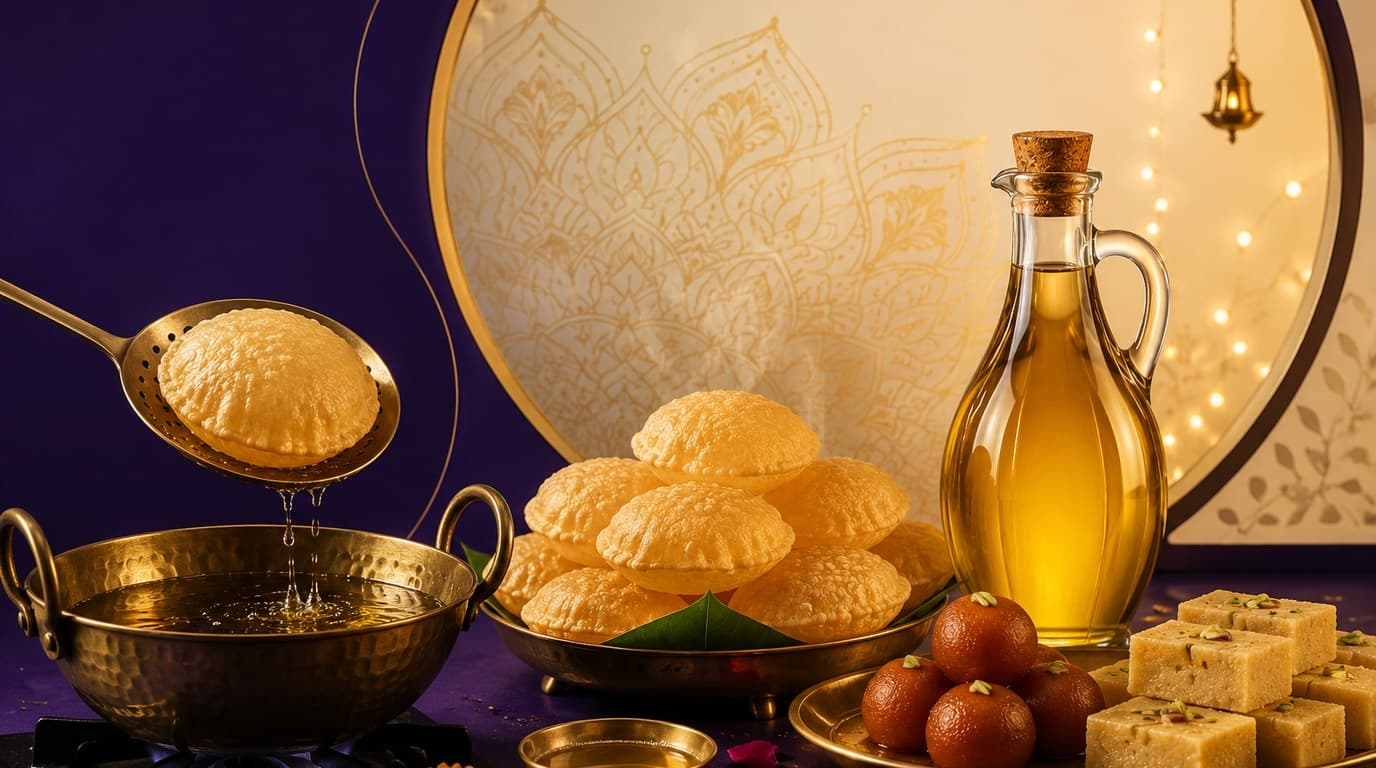
“During festive seasons like Durga Puja, Diwali, and Navratri, Indian kitchens fry hundreds of Luchis, Samosas, and Gujiyas. Rice Bran Oil's low dynamic viscosity and high 232°C smoke point create a micro-seal that cuts oil absorption by up to 20%, keeping your treats crisp for hours without greasy heaviness.”
From the crisp golden Luchis paired with Cholar Daal on Ashtami morning to Kachoris, Namkeens, and Gujiyas prepared for family gatherings, festive cooking in India is an art form.
Yet, the most common frustration for home cooks is flatbreads that turn soggy within thirty minutes, leaving unpleasant oil marks on napkins and causing digestive heaviness.
Let's examine the physics of deep frying, understand why oil absorption happens, and share professional kitchen secrets to ensure your festive delicacies stay light, crisp, and delicious.
1. The Physics of Capillary Oil Uptake in Indian Frying
When you drop dough into hot oil:
- Moisture inside the dough rapidly vaporizes, creating high internal steam pressure that puffs the dough outward (the balloon effect).
- Escaping steam prevents oil from penetrating the food during the initial frying phase.
- The Absorption Danger Zone: When you lift the food out of the oil, internal steam cools down and condenses. This creates a capillary vacuum that pulls surface oil into the crust pores.
Why Rice Bran Oil Absorbs Up to 20% Less Oil:
Viscosity (thickness) is the primary determinant of oil drainage. High-viscosity oils (like palm or unrefined groundnut) cling heavily to the crust when food is removed from the pan.Physically Refined Rice Bran Oil has exceptionally low dynamic viscosity at frying temperatures (180°C–190°C), allowing excess oil to slide back into the kadai instantly.
2. Comparison of Frying Performance Across Common Oils
| Frying Medium | Smoke Point | Oil Absorption Rate | Flavor Impact on Sweets/Luchis |
|---|---|---|---|
| Physically Refined Rice Bran Oil | 232°C (450°F) | Lowest (15%–20% less uptake) | Neutral (Preserves natural ghee / spice flavors) |
| Cold-Pressed Kacchi Ghani Mustard Oil | 250°C (482°F) | Moderate | Sharp & Pungent (Perfect for Kochuris & Samosas) |
| Commercial Vanaspati / Palm Olein | 200°C (392°F) | High (Greasy mouthfeel, high trans-fats) | Heavy, waxy lingering aftertaste |
| Desi Ghee (Pure Clarified Butter) | 250°C (482°F) | Moderate to High | Rich & Aromatic (Ideal for finishing halwas & sweets) |
3. The Dual-Fat Festive Kitchen Strategy
Top catering chefs and traditional halwais use the smart Dual-Fat Protocol during large festivals:
- 90% Cooking Volume in Rice Bran Oil: Deep fry your Luchis, Gulab Jamuns, Jalebis, and Namkeens in Jeevan Rekha Rice Bran Oil. You get high thermal stability, zero acrolein smoke, and 20% lower oil absorption with zero cholesterol.
- 10% Desi Ghee for Aroma: Add 2–3 tablespoons of pure desi ghee to the oil bath or drizzle over hot sweets just before serving for that authentic festive aroma without high cholesterol load. Read our full Rice Bran vs Desi Ghee comparison.
Explore our festive recipes for Authentic Cholar Daal and Luchi and 8 Authentic Diwali Sweets.